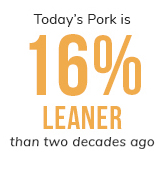
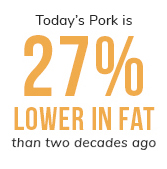
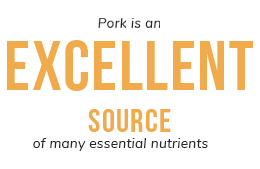
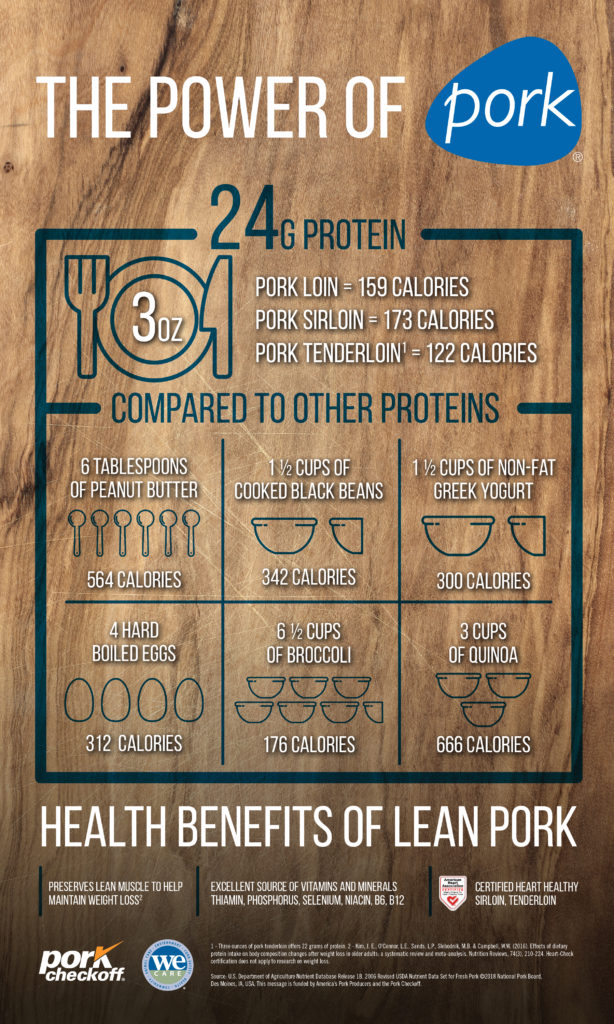
Pork is one of the most nutrient-dense proteins available. Lean cuts like pork tenderloin and pork sirloin are certified by the American Heart Association and meet USDA guidelines for “extra lean.” Today’s pork has about 16% less fat and 27% less saturated fat compared to 30 years ago, making it a smart choice for a balanced, healthy diet.
The Skinny on Lean Pork
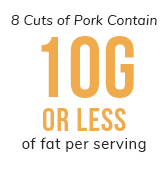
Both pork tenderloin and pork sirloin roast have earned the American Heart Association’s Heart-Check certification. To qualify, a food must contain less than 5 grams of total fat, 2 grams or less of saturated fat, and 480 milligrams or less of sodium per serving.
What vitamins are in pork?
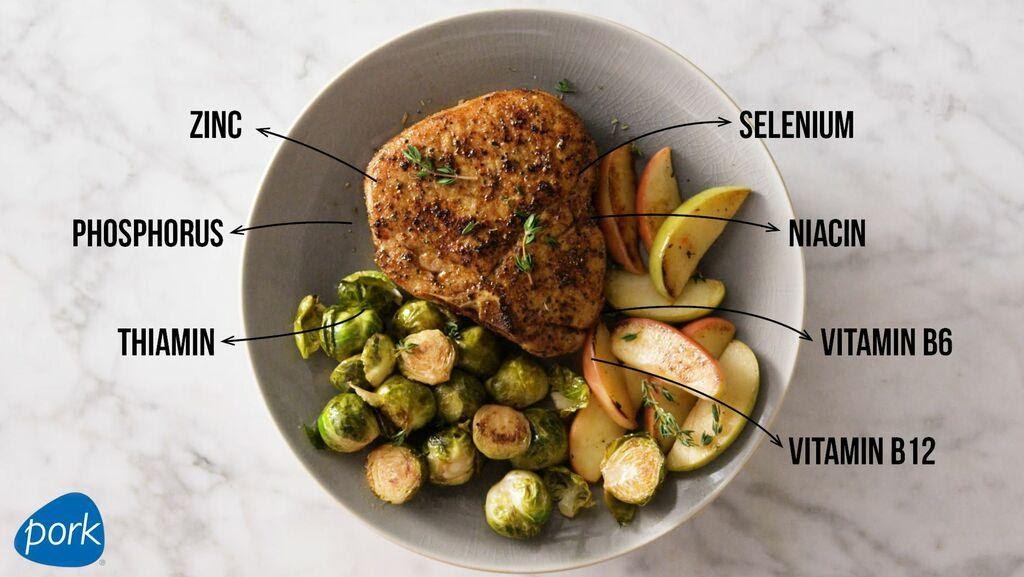
Thiamin (50% daily value per 3 oz serving) — Essential for metabolizing carbohydrates, protein, and fat. Pork is one of the best dietary sources of thiamin among all proteins.
Niacin (34% DV) — Supports enzyme function and the metabolism of sugars and fatty acids.
Vitamin B6 (30% DV) — Needed to metabolize protein, carbohydrates, and fats.
Riboflavin (20% DV) — Plays a key role in releasing energy from food.
Vitamin B12 (25% DV) — Helps build red blood cells and metabolize carbohydrates and fats.
Zinc (25% DV) — Supports energy metabolism and immune function.
Phosphorus (15% DV) — Strengthens bones and generates energy in cells.
Protein (46% DV) — A 3-ounce serving of pork provides up to 24 grams of complete protein.
Source: USDA Agricultural Research Service, based on a 3-ounce cooked serving.
How much fat in lean cuts of pork?
| Cut (3 oz cooked) | Total Fat | Saturated Fat |
|---|---|---|
| Pork tenderloin | 2.98g | 1.02g |
| Sirloin pork chop | 3.71g | 1.15g |
| Sirloin pork roast | 4.51g | 1.52g |
| New York pork chop | 5.17g | 1.77g |
Pork Nutrition Q&A
Is pork a healthy protein option?
Yes. Today’s fresh, lean pork is lower in fat than many people realize and provides high-quality protein along with essential vitamins and minerals that support overall health. A 3-ounce sirloin pork chop contains 24.3 grams of protein and only 137 calories.
How does pork compare to chicken breast?
Lean pork compares very favorably to chicken breast nutritionally. A sirloin pork chop contains similar protein levels while also providing significantly more thiamin and vitamin B12. Pork is also higher in riboflavin than chicken breast.
Does pork contain heart-healthy fats?
Yes. More than half of the fat in a sirloin pork chop is unsaturated fat, the type commonly associated with heart health. Sirloin pork chops are also lower in saturated fat than strip steak.
Can pork fit into a heart-healthy eating pattern?
Absolutely. Several pork cuts are certified by the American Heart Association Heart-Check program, including pork tenderloin, sirloin pork roast, and sirloin pork chop. Research also shows lean pork can fit into DASH and Mediterranean-style eating patterns that support heart health.
Does eating pork increase cholesterol or heart disease risk?
Research shows lean pork can be part of dietary patterns that lower total cholesterol and does not appear to be linked to increased risk of heart disease or stroke when consumed as part of a balanced diet.
Can pork support weight management goals?
Yes. Studies referenced in the materials found that lean pork can support weight management, feelings of fullness, and healthy body composition. In some studies, participants lost body fat and improved physical function while including lean pork in their eating plans.
Is pork a good option for people with prediabetes or type 2 diabetes?
Lean pork can fit into healthy eating patterns for people managing blood sugar. Research included in the handouts found that high-protein breakfasts with lean pork helped lower after-meal blood sugar and insulin responses compared to sugary breakfast options.
What vitamins and minerals are found in pork?
Pork provides important nutrients including B vitamins, phosphorus, selenium, zinc, choline, magnesium, and iron. These nutrients help support energy metabolism, brain function, muscle health, and overall wellness.
How does pork compare to plant-based protein alternatives?
Lean pork offers more protein per serving than many plant-based alternatives. A sirloin pork chop contains 24.3 grams of protein compared to 16.8 grams in an Impossible Burger serving. Pork also provides nearly 90% more phosphorus.
Why is pork beneficial for people using GLP-1 medications?
People using GLP-1 medications often eat smaller portions and may struggle to get enough protein and key nutrients. Pork provides complete, high-quality protein along with nutrients commonly at risk for deficiency, including iron, vitamin B12, and zinc.
How can pork help support muscle health on GLP-1 medications?
Experts recommend prioritizing high-quality protein to help maintain lean muscle mass while using GLP-1 medications. Pork delivers complete protein that supports strength, fullness, and muscle maintenance, especially when paired with physical activity.